The Sound of Silk: Why I Resurrect 100-Year-Old Kimonos

Updated: Sep 24

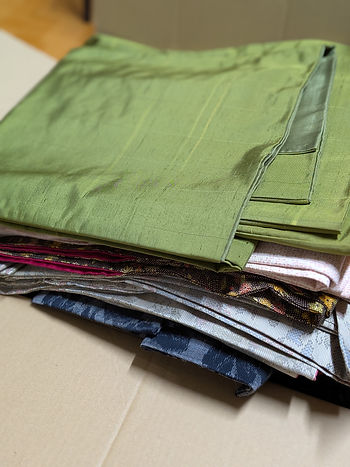
Title: The Sound of Silk: Why I Resurrect 100-Year-Old Kimonos
Can you imagine how much authentic silk is thrown away every single day in Japan? The amount is staggering. Among them are "Tsumugi" silks, hand-woven over 100 years ago. They are discarded simply because they don't fit modern lifestyles.
In Japan, we have a word: "Mottainai" (What a waste).
I am a professional Wasaishi (Japanese Hand-Tailoring Master). I cannot stand by and watch this history burn. My mission is to resurrect these discarded treasures into one-of-a-kind Duster Coats.
Why hand-sewn? Unlike machine sewing, my hand-stitching uses flexible silk threads that move with your body. The coat "breathes" and flexes. When you move, you hear the distinct kyu-kyu (rustling) sound—the proof of high-quality Japanese silk.
The Technical Challenge Traditional Kimono fabric rolls (Tanmono) are only about 37-40cm wide. This is too narrow for the arm length of modern global standards. This is where my skills as a Wasaishi are essential.
Using traditional techniques of "Hagi" (joining) and "Wari" (adjusting seam allowances), I reconstruct the narrow fabric to create ample sleeve length and a silhouette that fits the modern body perfectly.
I turn the "unwearable" into "wearable art." From Japan to the world, saving history one coat at a time.

Comments